Relocating abroad presents numerous challenges, with one of the most significant being the language barrier. Many expats find that moving to a country where English is widely spoken can ease the transition, facilitating smoother integration into daily life, work, and community. In 2026, countries like Canada, Hungary, the UAE, Ireland, New Zealand, Australia, Portugal, Malta, and Cyprus are recognized as some of the best English-speaking countries to live in, offering strong English access, high safety scores, and clear residency or citizenship pathways. In this article, we’ll explain how we ranked the best English-speaking countries to move to in 2026, break down their strengths and drawbacks, compare costs of living, and explore residency and investment options — helping you decide which destination best fits your lifestyle, career, or retirement goals.
Overview of Top English-Speaking Countries for Relocation 2026
Country
English Proficiency
Main Residency / Visa Options
Key Highlights
Netherlands
Very High
Highly Skilled Migrant, DAFT Visa, EU Blue Card
Strong economy, excellent healthcare
Sweden
Very High
Work Permit, Self-Employed Visa
Work-life balance, beautiful nature
Ireland
Native
Critical Skills Employment, Startup Visa, Stamp 0
English-speaking, strong job market
Portugal
Very High
Golden Visa, D7 Visa, Digital Nomad Visa
Sunny climate, affordable lifestyle
Greece
High
Golden Visa, Digital Nomad Visa, Financial Independence
Low cost, rich culture
Austria
Very High
Red-White-Red Card, EU Blue Card
High quality of life, excellent healthcare
Switzerland
High
Employment Permit, Investor Residency, C Permit
High salaries, political stability
Hungary
High
Guest Investor Visa, White Card
Affordable, historic charm
Cyprus
Moderate
Category F, Digital Nomad Visa, Investor Program
Favorable taxes, Mediterranean climate
Malta
Native
Permanent Residence Programme, Digital Nomad Visa
English official language, sunny
Italy
Moderate
Elective Residence, Digital Nomad Visa, Investor Visa
Culture, cuisine, landscapes
Canada
Native
Express Entry, Provincial Nominee, Startup Visa
Multicultural, excellent healthcare
Australia
Native
Skilled Migration, National Innovation Visa
Strong economy, beaches, outdoor life
New Zealand
Native
Skilled Migrant, Entrepreneur Visa, Investor Visa
Stunning nature, work-life balance
Belize
Native
Retired Persons Program, Temporary Residence, Digital Nomad Visa
Caribbean lifestyle, English official
Argentina
High
Rentista Visa, Digital Nomad Visa, Investor Visa
Vibrant culture, affordable living
El Salvador
Moderate
Residency by income/investment, Citizenship by Investment
No income tax, tropical lifestyle
Nauru
Native
Citizenship by Investment
Quiet island living
Antigua & Barbuda
Native
Digital Nomad Visa, Citizenship by Investment
Family-friendly, tropical
St. Lucia
Native
Citizenship by Investment
Natural beauty, remote processing
Grenada
Native
Citizenship by Investment
US E-2 Visa access, stable politics
St. Kitts & Nevis
Native
Citizenship by Investment
Established program, strong passport
Dominica
Native
Citizenship by Investment
Affordable, natural beauty
United Arab Emirates
Low
Investor Visa, Green Visa, Digital Nomad Visa
Safest ranking, tax-free income
Türkiye
Low
Digital Nomad Visa, Investor Residency, Citizenship by Investment
Affordable, rich history
How Did We Rank the Best English-Speaking Countries 2026?
To provide a reliable and objective guide, we evaluated countries across multiple dimensions that matter most to expats. Our methodology combines language accessibility, safety, cost, lifestyle, and residency options to ensure a holistic ranking.
Ranking Criteria
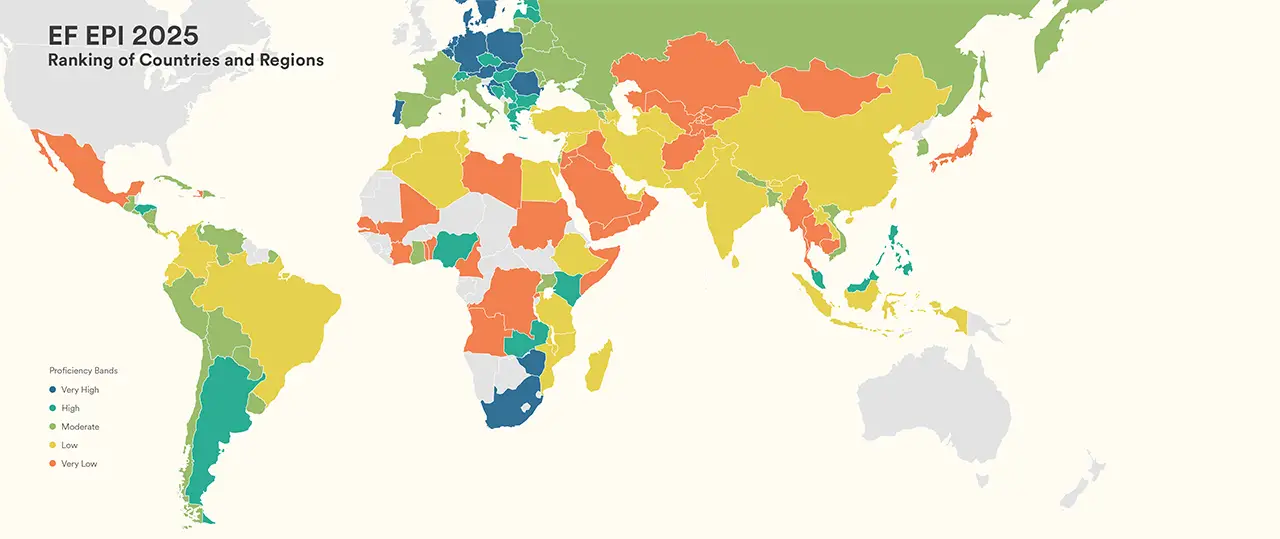
English Proficiency: Measured using the EF English Proficiency Index (EF EPI 2025), which evaluates non-native English skills globally. Countries where English is widely spoken or an official language scored higher.
Safety: Assessed using Numbeo’s crime and safety data, including both violent and petty crime indicators.
Cost of Living: Average monthly expenses for individuals and families, including housing, food, transportation, and utilities, sourced from Numbeo and Mercer 2026 reports.
Residency & Citizenship Options: Availability of Golden Visas, Citizenship by Investment (CBI), Digital Nomad Visas, and retirement permits, including application ease, investment thresholds, and family inclusions.
Quality of Life: Based on Mercer Quality of Living Index and OECD indicators, including healthcare quality, education, infrastructure, environmental quality, and social stability.
Healthcare: Access to affordable, high-quality healthcare services, both public and private.
Expat Appeal: Size of the expat community, English-friendly services, cultural openness, and ease of integration.
By combining these metrics, we created a comprehensive ranking of English-speaking countries for 2026 that balances safety, affordability, language accessibility, and lifestyle opportunities.
What are English-Speaking Countries on the Map?
English-speaking countries on the map include native English nations like the US, UK, Canada, Australia, New Zealand, and several Caribbean states, as well as high-proficiency countries identified by the EF EPI 2025 such as the Netherlands, Austria, Greece, Cyprus, Portugal, etc.
Europe: The Epicentre of High Proficiency
Europe dominates the top tiers of English proficiency, with Northern European nations leading the way. According to the EF EPI 2025, the Netherlands claims the top position globally with a score of 624, followed closely by Croatia (617), Norway (613), and Sweden (609). Other standout performers include Portugal (612) and Sweden (609). Western European nations like France (539) show moderate proficiency, while Eastern European countries like Poland (600) and Hungary (590) demonstrate strong English capabilities.
Americas: A Tale of Two Hemispheres
The Americas present a diverse picture of English proficiency. Argentina leads the region with high proficiency (575), while other Latin American nations show more varied results. Costa Rica (516) demonstrates moderate proficiency, whereas Brazil (482) and Mexico (440) fall into the lower proficiency bands. The United States and Canada, as native English-speaking nations, are not included in these rankings but represent the highest possible proficiency level for the region.
Asia-Pacific: A Region of Contrasts
The Asia-Pacific region showcases dramatic variations in English capability. Singapore was reclassified as a native English-speaking country in the latest EF EPI ranking. Malaysia took the top position (581) in Asia, followed by the Philippines (560). However, major economies like China (464), South Korea (522), and Japan (446) demonstrate more moderate to lower proficiency levels, highlighting the diverse linguistic landscape across Asian nations.
Africa: Emerging English Capabilities
South Africa leads the African continent with high proficiency (602), ranking 13th globally. Kenya also shows strong English capabilities with a high proficiency rating (593). Other African nations like Ghana (540) demonstrate moderate proficiency, while countries such as Ethiopia (498) and Tanzania (499) show lower proficiency levels. The data reveals significant opportunities for English language development across many African nations.
Middle East: Moderate to Low Proficiency
The Middle East shows room for growth in English proficiency. The United Arab Emirates (487) and Kuwait (455) demonstrate low proficiency levels, while Saudi Arabia (404) falls into the very low proficiency category. These results indicate potential areas for focused English language education and training initiatives.
Caribbean: Limited Data but Native English Presence
Many Caribbean countries are native English-speaking territories, including Jamaica, Barbados, Trinidad and Tobago, Antigua and Barbuda, Dominica, Grenada, and Saint Lucia. These nations naturally demonstrate very high English proficiency, even if they are not always included in EF EPI rankings, which primarily focus on non-native English-speaking countries.
What are Top English-Speaking Countries to Live in 2026?
Top destinations include the Netherlands, Sweden, and Ireland for their very high English proficiency and quality of life. Excellent options also include Canada, Australia, and New Zealand as native English-speaking countries with diverse opportunities, alongside Mediterranean choices like Portugal, Greece, and Cyprus for their climate and high English usage.
Safety indicators below are based on the Numbeo ranking mid-2026.
Netherlands
English Proficiency: Very High (624) | Safety Ranking: 19th | Cost of Living: ~€1,500/month
Residency Options:
Highly Skilled Migrant Visa: For employed professionals
DAFT Visa: For American entrepreneurs (€4,500 investment)
EU Blue Card: For highly qualified non-EU workers
Self-Employment Visa: Points-based assessment; business contribution / “essential Dutch interest”
Pros: World-class healthcare (#4 in the 2024 World Index of Healthcare Innovation), excellent public transport, strong economy
Cons: High income tax (8.17%-49.5%), competitive housing market, rainy climate
Austria
English Proficiency: Very High (616) | Safety Ranking: 28th | Cost of Living: ~€1,900/month
Residency Options:
Red-White-Red Card: For skilled workers in shortage occupations and self-employed key workers
EU Blue Card: For highly qualified professionals
Settlement permit except gainful employment: monthly income from €2,547.98.
Pros: Excellent healthcare, high quality of living (Vienna ranks 1st in Mercer’s 2024 Quality of Living ranking) clean cities, central location
Cons: Strict immigration, high German requirement for permanent residency
Portugal
English Proficiency: Very High (612) | Safety Ranking: 38th | Cost of Living: ~€1,600/month
Residency Options:
Golden Visa: minimum investment of €500,000 in private equity funds
D7 Passive Income Visa: €820/month income
Digital Nomad Visa: €3,480/month income
Pros: Affordable living, great climate, friendly locals
Cons: Bureaucratic processes, lower salaries
Portugal ranks 7th worldwide on the Global Peace Index 2025 and takes the top spot in Expatsi’s ranking of countries most desired by Americans for relocation.
Sweden
English Proficiency: Very High (564) | Safety Ranking: 87th | Cost of Living: ~ €1,600/month
Residency Options:
Work Permit: Job offer required
Self-Employed Visa: Business plan and proof of funds
Malta Permanent Residence Programme: €169,000+ investment
Global Residence Programme: €8,750+/annum rental/€220,000+ purchase
Digital Nomad Visa: €2,700/month income
Pros: English official language, sunny climate, small community
Cons: Small island limitations, summer overcrowding
Italy
English Proficiency: Moderate (513) | Safety Ranking: 85th | Cost of Living: ~€1,500/month
Residency Options:
Elective Residence Visa: €31,200+ passive income
Italy Digital Nomad Visa: €28,000+ annual income Investor Visa: €250,000+ investment Pros: Unbeatable cuisine, rich culture, diverse landscapes
Cons: Bureaucracy, lower English proficiency outside cities
In September 2025, Fitch Ratings upgraded Italy’s credit from BBB to BBB+ for the first time since 2021.
Canada
English Proficiency: Native | Safety Ranking: 77th | Cost of Living: ~$2,500/month
Residency Options:
Express Entry: Points-based immigration system for skilled workers
Provincial Nominee Program: Regional sponsorship
Startup Visa: For entrepreneurs
Quebec Selected Business Immigration Program: entrepreneurs with a net worth of $300,000 / investors with a net worth of $1,146,000 and investment of $573,000
Pros: High quality of life, excellent healthcare, diverse culture
Cons: High costs, cold winters, competitive job market
Australia
English Proficiency: Native | Safety Ranking: 86th | Cost of Living: ~$3,500/month
Residency Options:
Skilled Migration Program: Points-based system for skilled workers
National Innovation Visa: For globally talented and exceptionally accomplished individuals
Pros: US E-2 visa eligibility, beautiful beaches, stable politics
Cons: Limited infrastructure, hurricane season
St. Kitts and Nevis
English Proficiency: Native | Cost of Living: ~$1,800/month
Residency:
Home ownership for a minimum of 7 years: $350,000+ investment
For retirees: immediate residency with ownership of a home worth $350,000 at least Citizenship by Investment:
Sustainable Island State Contribution: $250,000+ donation
Developer’s Real Estate: $325,000+ investment
Private Real Estate: $600,000+
Approved Public Benefits Projects: $250,000+
Pros: Established program, strong passport, quick processing
Cons: Higher costs, due diligence fees
Power brands: Greece + Astons
Dominica
English Proficiency: Native | Cost of Living: ~$1,400/month
Residency
For retirees: minimum income of $1,500 per month
For digital nomads: “Work in Nature” program; minimum income of $50,000 a year
Pros: Affordable, rich history, diverse landscapes
Cons: Lower English proficiency, currency volatility
What are the Best English-Speaking for Specific Groups?
For Families
Families relocating abroad in 2025 are often focused on education, healthcare, and safe environments.
Canada offers universal healthcare, world-class schools, and diverse communities. It remains a top English-speaking destination for families.
Ireland is another excellent choice, combining native English, strong academic institutions, and a welcoming culture.
Netherlands and Sweden, while not native English-speaking, are ranked among the best for international schools and high-quality healthcare, with English widely spoken.
For Retirees
Retirees typically value affordability, stability, and lifestyle benefits.
Portugal remains one of the most attractive options, with its D7 visa, affordable living, and excellent climate.
Greece also offers affordable housing, Mediterranean living, and healthcare options at a fraction of the cost compared to Western Europe.
Belize stands out in the Caribbean as an English-speaking country offering the Qualified Retired Persons Program (QRP).
Malta provides a sunny environment, healthcare access, and permanent residence programs.
For Digital Nomads
Remote workers look for good connectivity, vibrant communities, and flexible visas.
Portugal leads with its Digital Nomad Visa, reliable internet, and strong expat hubs in Lisbon and Porto.
Hungary attracts digital nomads with the White Card, one of the most affordable entry points in the EU.
Greece and Malta also offer digital nomad visas, with strong English proficiency and sunny climates.
UAE (Dubai in particular) is a growing hub for freelancers and remote workers thanks to its Virtual Working Program.
For Investors and Professionals
Entrepreneurs and investors benefit from fast-track residency and citizenship routes.
Caribbean countries like Antigua & Barbuda, St. Lucia, Grenada, St. Kitts & Nevis, and Dominica provide Citizenship by Investment programs that grant passports in as little as 3–6 months.
UAE is a global investment hub with Golden Visas for property buyers, entrepreneurs, and professionals.
Türkiye continues to attract investors with one of the most affordable real estate-based citizenship programs in the world.
Switzerland and Austria offer residency by investment options for high-net-worth individuals seeking stability in Europe.
The cost of living is a key factor when choosing where to relocate. Below is a 2025 comparison of average monthly expenses for some of the top English-friendly destinations, compared with baselines like the US and UK.
Here’s the full cost of living table converted to USD for all the countries you listed:
Country
Avg. Monthly Cost ($)
Housing
Food
Transport
Utilities
Portugal
1,700
749
321
160
160
Greece
1,000
428
268
128
107
Netherlands
1,600
1,177
428
193
160
Sweden
1,700
1,070
428
171
160
Ireland
1,900
1,391
482
214
160
Austria
2,000
1,017
407
160
128
Switzerland
4,000
2,180
763
272
218
Hungary
1,200
535
268
107
86
Cyprus
1,900
802
374
128
128
Malta
2,200
963
428
139
128
Italy
1,600
910
372
128
118
Canada
2,500
1,200
400
200
150
Australia
3,500
1,800
500
250
200
New Zealand
2,200
1,400
450
220
180
Belize
1,500
600
300
100
100
Argentina
1,200
700
250
80
70
El Salvador
1,500
700
250
90
80
UAE
2,500
1,500
600
200
180
Türkiye
1,200
500
250
90
80
US (Baseline)
2,800
1,400
500
300
200
UK (Baseline)
2,750
1,500
500
312
188
Inflation and Budgeting Tips for 2025
Global economic changes in 2025 have impacted everyday expenses, including housing, utilities, and groceries. While some countries remain affordable, inflation can affect long-term planning for relocation or digital nomad lifestyles. Here are key tips:
Plan for Annual Increases: Even budget-friendly countries like Greece, Hungary, or Belize are experiencing modest price rises. Factor in a 5–10% increase in living costs per year when budgeting.
Housing Costs Are Key: Rent and property prices often rise faster than food or transport. For example, Portugal, Malta, and the Netherlands have seen double-digit increases in rental prices in popular cities.
Currency Fluctuations Matter: If your income is in USD or EUR but you live in a country like Türkiye or Argentina, keep an eye on currency exchange rates to maintain purchasing power.
Utilities and Food: These are increasingly affected by global energy costs and supply chain disruptions. Consider local markets and seasonal products to reduce expenses.
Use Digital Tools: Budgeting apps and cost-of-living calculators for expats can track inflation-adjusted spending and help plan a comfortable lifestyle.
Emergency Fund: Keep 3–6 months of living expenses in reserve, especially in countries with currency volatility or higher inflation.
By planning for inflation and tracking costs, you can maintain financial stability while enjoying the benefits of living in some of the best English-speaking countries for expats.
Conclusion
Relocating to an English-speaking country in 2025 offers a wide range of opportunities depending on your lifestyle and goals. Families can enjoy excellent education and healthcare in Canada, Ireland, or the Netherlands. Retirees benefit from affordable, sunny destinations like Portugal, Greece, and Belize. Digital nomads can take advantage of flexible visas in Portugal, Hungary, and Malta, while investors and professionals gain fast-track residency or Citizenship by Investment programs in the Caribbean, UAE, and Türkiye.
Key Benefits of English-Speaking Relocation in 2025:
Access to quality education and healthcare
Simplified integration with English widely spoken
Opportunities for remote work, entrepreneurship, and investment
Pathways to permanent residency and citizenship
Learn more
Request a Free Consultation
Astons provides personalised support for residency and citizenship programs worldwide. Consult our specialists to explore immigration options and identify the best relocation path for you.
As Greece is a member of the European Union, the entry visa regulations for Greece are the same as for all EU member states.
Depending upon your nationality, of course, most countries are visa-exempt for 90-day stays in the EU.
However, soon all non-EU citizens and non-EU residents will need pre-approval prior to entering the European Union and Greece – regardless of what passport they possess.
The new visa entry regulations are targeted for implementation prior to the end of 2025, when the EU will be launching ETIAS, its new eVisa system.
The Greece Golden Visa will provide an exemption to the ETIAS requirement.
Susanna Uzakova
Senior Citizenship & Residency Advisor
Are there any language requirements for the Greek Golden Visa?
No, the Greek Golden Visa has no language requirements for either application approval or maintaining Greek residency.
The residency provided by the Greek Golden Visa is directly connected to the investment made by the individual – providing the program’s requirements for investment holds are maintained, the corresponding Greek residency is also maintained.
However, the residency acquired through the Greek Golden Visa can lead to citizenship, but the eligibility for citizenship could involve a language requirement – this is above and beyond the Greek Golden Visa program and is simply a future option for all legal residents of Greece.
Susanna Uzakova
Senior Citizenship & Residency Advisor
Can I invest in any real estate I want or am I restricted as to what I can buy?
It is true that some Golden Visa programs restrict investors to only approved projects of newly constructed residential homes in specific locations.
The lack of this element is what makes the Greek Golden Visa one of the most popular and sought-after EU residency programs.
Under the Greece Golden Visa, all real estate throughout Greece is eligible – providing that the property meets or exceeds the required minimum investment threshold for the area in which it is located.
The property can be move-in ready new construction or a 100-year old preservation project.
It can be residential or commercial real estate.
In fact, it can be for the investor’s personal use or to be used for rental income.
The investor is free to choose where they would like to invest and what they want to invest in – providing the property meets the required investment minimums.
Susanna Uzakova
Senior Citizenship & Residency Advisor
Could the Greek Golden Visa lead to EU citizenship?
As with any residency visa, the permanent residency gained via the Greece Golden Visa can lead to citizenship eligibility – but this is not guaranteed, nor is it an element of the residency by investment program.
The eligibility requirements for Greek citizenship are completely separate and distinct from those that govern the Greek Golden Visa program.
Simply being approved for residency and maintaining the Greek Golden Visa requirements will not satisfy the criteria for citizenship alone.
For example, there are no physical residency requirements for the Golden Visa, however, citizenship eligibility requires seven [7] years of continuous physical residency.
While it is entirely possible for Greek Golden Visa investors to become eligible for Greek – and thus EU – citizenship, this is a decision the investor needs to plan for and take additional steps to work towards.
Susanna Uzakova
Senior Citizenship & Residency Advisor
The Greek Golden Visa has seven options, which one is the best?
This is one of the most common and best questions the experts at Astons are always asked.
While a significant percentage of Astons clients have been very successful with generating ROI by investing in rental properties in Athens, this does not mean that the real estate option is the best choice for every investor.
The multiple investment options provided by the Greek Golden Visa is unparalleled for EU programs, and is another reason why this program is one of the most sought-after EU residency routes in existence.
Astons has found that the real estate option is the most popular choice due to its ROI potential, but our experts examine the individual situation of every client to determine which program and investment options best suit the client’s wants, needs, goals, and demands.
Schedule a Free Consultation with Astons to better understand how you can fully leverage the world of investment migration solutions to its maximum benefit.
Susanna Uzakova
Senior Citizenship & Residency Advisor
Still have questions?
Support details to capture customers that might be on the fence.





































 +44 207 043 6026
  +357 252 30233
  +971 454 01311
  +902 129 008 710
  +302 112 340 656
  +1 (888) 2033901


 18-minute read
  18-minute read
  371 views
  Share
Share 















 Learn more







 Your Data is Protected